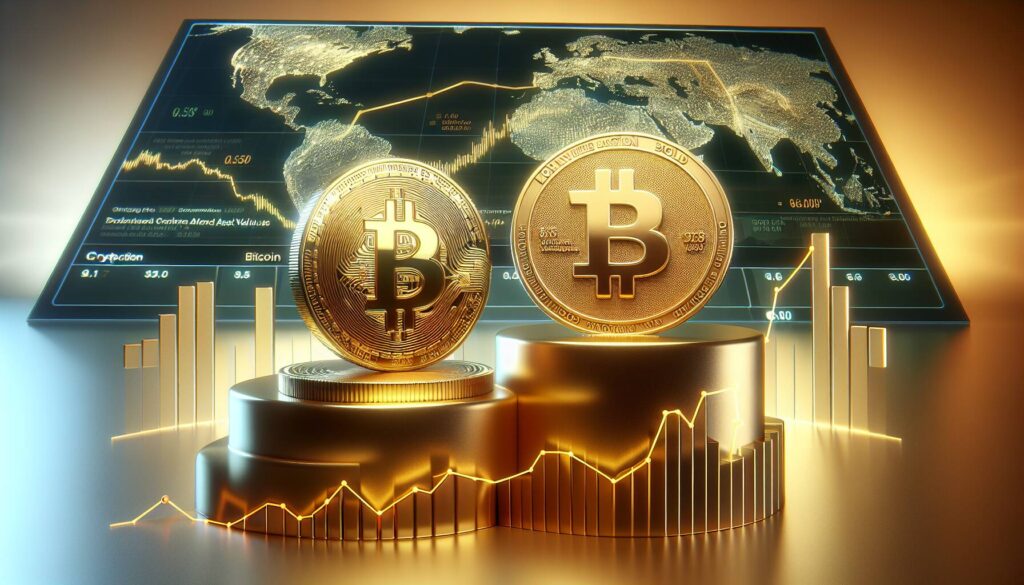
The cryptocurrency landscape continues to evolve, with innovative concepts reshaping how we perceive traditional assets. Recently, experts have highlighted the growing significance of tokenized gold—a modern twist that enhances the utility of gold as a store of value. Unlike traditional gold, which often faces challenges in liquidity and accessibility, tokenized gold offers a digital solution that streamlines transactions and broadens market participation.
In contrast, bitcoin has found itself navigating turbulent waters, increasingly likened to a risk asset. The inherent volatility of bitcoin becomes particularly evident during uncertain economic times, leading to debates about its long-term role in investment portfolios. Many investors are grappling with whether to view bitcoin as a safeguard against inflation or simply another speculative asset.
“Tokenized gold is revolutionizing how we value precious metals, while bitcoin’s performance paints a complex picture amid market fluctuations,”
noted one industry expert. This dual development highlights a fascinating intersection in the financial world, as traditional assets meet the cutting-edge technology of blockchain, paving the way for innovative investment strategies.
Impact of Tokenized Gold and Bitcoin on Value Storage
Key aspects of the evolving landscape of investment in traditional and digital assets:
- Tokenized Gold Enhancements
- Increased accessibility for investors.
- Lower transaction costs compared to physical gold.
- Improved liquidity in the market.
- Bitcoin’s Role as a Risk Asset
- Volatility influenced by market sentiments and economic conditions.
- Utilization as a hedge against fiat currency fluctuations.
- Proximity to traditional assets during uncertain times.
- Interconnected Market Dynamics
- Shifts in investment strategy due to the rise of digital assets.
- Impact on traditional wealth preservation methods.
- Encouragement of diversified portfolios with lower risk exposure.
The interplay between tokenized assets and traditional forms of value representation offers new opportunities and challenges for investors navigating uncertain economic climates.
Exploring the Future of Asset Security: Tokenized Gold vs. Bitcoin
The shift toward tokenized gold represents a groundbreaking evolution in how investors perceive physical assets. Unlike traditional gold, which has long been a safe haven, tokenized gold enhances liquidity and accessibility, allowing investors to buy, sell, and trade with unprecedented ease. This digital transformation can significantly alter retail and institutional investment strategies, presenting a stark contrast to bitcoin, which, as highlighted by a recent analysis, resembles a volatile risk asset amid economic uncertainty.
Competitive Advantages: Tokenized gold’s primary edge lies in its intrinsic stability and link to a physical, historically valued metal. As a hedge against inflation, it appeals to conservative investors looking for lower volatility compared to more speculative assets like bitcoin. Furthermore, tokenization facilitates fractional ownership, making gold more accessible to a broader audience, including younger investors and those with smaller portfolios.
Competitive Disadvantages: However, tokenized gold must grapple with the challenge of market perception. The very nature of gold being a physical asset can sometimes lead to skepticism regarding the security and trustworthiness of tokenized forms. On the flip side, bitcoin’s established reputation as a pioneer in the cryptocurrency realm draws risk-tolerant investors despite its inherent price swings. The fundamental challenge lies in educating consumers about the reliability of tokenized assets amidst the backdrop of a highly speculative crypto market.
This emerging landscape could greatly benefit risk-averse investors and those seeking stability in their portfolios, particularly during turbulent economic times. Conversely, potential problems may arise for traditional gold holders who may feel threatened by the digital transition, as well as for financial advisors who struggle to delineate between the utility of tokenized gold and the allure of cryptocurrencies for their clients. Ultimately, by understanding these assets’ unique positions in the market, investors can better navigate their financial futures.