









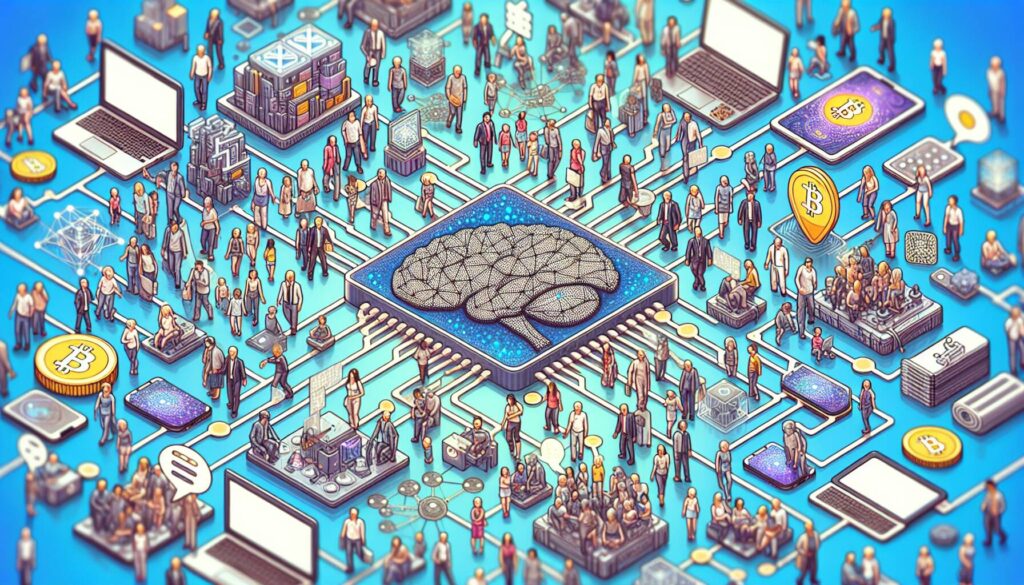
In a bold move for the evolving landscape of technology and finance, Bitcoin veteran and crypto expert Brukhman has articulated a vision where tokenized artificial intelligence (AI) is poised to democratize access to what he considers the world’s most valuable resource. This revolutionary approach aims to break down traditional barriers, making AI tools and capabilities accessible to a much wider audience, beyond just big corporations and tech giants.
“Tokenizing AI will ensure that everyone, not just the elite, benefits from this transformative technology,” Brukhman asserts.
As the AI sector continues to expand rapidly, growing by an estimated 42% each year, the integration of blockchain technology into this realm could redefine how individuals and businesses interact with AI resources. The concept of tokenization allows for fractional ownership and usage, potentially opening the floodgates for innovation and collaboration while fostering inclusivity in a space often dominated by a few key players.
This move has significant implications not only for developers and entrepreneurs but also for consumers who seek enhanced access to AI-driven solutions. By leveraging the decentralized nature of blockchain, tokenized AI could empower a new generation of creators to build applications that meet a broader array of needs, paving the way for unforeseen advancements and applications across various sectors of society.
“Imagine a world where small startups and individual developers can harness the power of AI without a heavy financial burden,” Brukhman envisions.
As discussions around the utility and ethical considerations of AI intensify, the push for tokenized access might just be the solution that levels the playing field, ensuring that the advantages of AI technology are shared more equally among all participants in the digital economy.
Tokenized AI: Democratizing Access to Valuable Resources
The concept of tokenized AI presents significant implications for accessibility and resource distribution in technology. Here are the key points:
- Democratization of AI: Tokenized AI could make advanced artificial intelligence tools available to a broader audience, reducing barriers to entry.
- Value Redistribution: By utilizing tokens, value generated by AI can be shared among contributors, promoting fairness and equity.
- Ownership and Control: Tokenization allows users to maintain ownership of their data and the AI models, giving them greater control over how it’s used.
- Enhanced Innovation: With wider access, more individuals and organizations can innovate, potentially accelerating technological advancements.
- New Economic Models: Tokenized ecosystems could create new business models that leverage AI, benefiting entrepreneurs and businesses.
Access to tokenized AI could ultimately reshape industries by empowering a diverse group of users, impacting various aspects of economic growth and technological development.
Tokenized AI: A New Era of Accessibility and Challenges
The emergence of tokenized AI, as advocated by thought leader Brukhman, promises to democratize access to artificial intelligence technology, transforming how individuals and businesses utilize this invaluable resource. This shift could lead to significant competitive advantages, particularly for smaller enterprises and independent developers that have traditionally struggled to leverage cutting-edge AI solutions.
One of the key advantages of tokenized AI lies in its potential to lower barriers to entry. By allowing users to access and contribute to AI models through a token economy, individuals who may lack extensive financial resources or technical expertise can engage with advanced technologies. This accessibility could foster innovation, enabling a wave of new applications and services that enrich various sectors, from healthcare to finance.
However, there are also inherent disadvantages to this model. The decentralized nature of tokenized platforms raises concerns about quality control and data security. Users may encounter unregulated or poorly designed AI tools, leading to inconsistent performance and potential misuse. Furthermore, this democratization could also lead to market saturation, intensifying competition and making it harder for standout innovations to gain traction.
If successfully implemented, tokenized AI could primarily benefit startups and small businesses eager to experiment with AI without the heavy overhead typically associated with such technologies. However, it also poses challenges for established companies that might find it harder to maintain their market share in a landscape where new entrants can innovate rapidly. Additionally, industry giants may face scrutiny regarding their data practices and the ethical implications of a more fragmented AI ecosystem, creating hurdles in public perception and regulatory compliance.
In summary, while tokenized AI heralds an exciting shift toward more inclusive technology access, it brings with it complexities that will require careful navigation by those involved in this evolving landscape.