









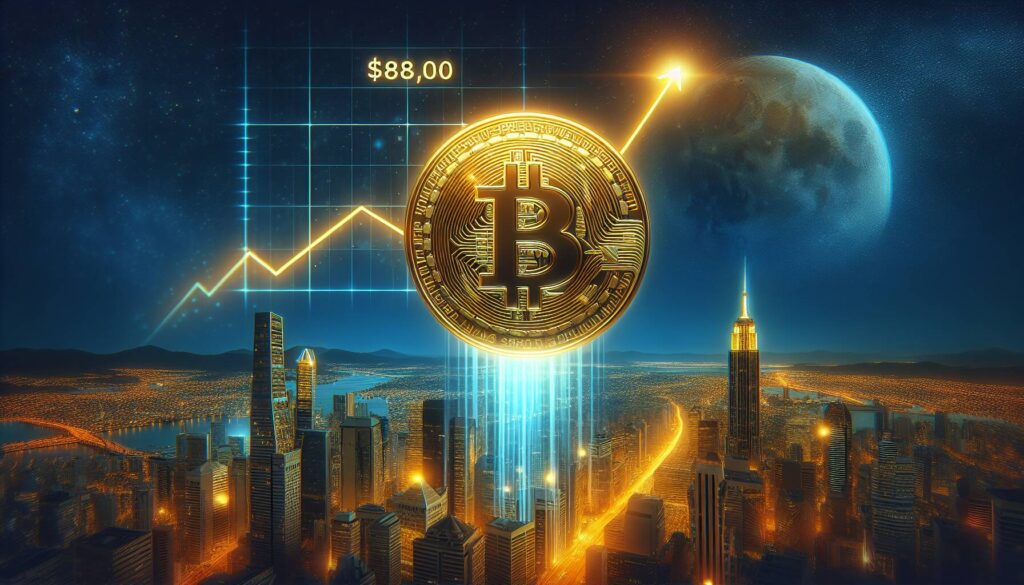
In a striking turn of events, Bitcoin has soared past the $88,000 mark, igniting excitement among traders and enthusiasts alike. This surge comes against a backdrop of rising inflation forecasts, with expectations that inflation rates may persist above the 3% threshold. The cryptocurrency market often reacts to economic conditions, and the current inflationary climate appears to be fuelling renewed interest in digital assets.
“As inflation pressures remain a central focus for the economy, Bitcoin’s surge reflects its growing status as a possible hedge against declining purchasing power,” analysts suggest.
The relationship between traditional economic indicators and cryptocurrency movements continues to be a compelling narrative. With Bitcoin achieving this significant milestone, many are watching closely to see how sustained inflation impacts overall market trends. Investors remain alert to the evolving landscape, as fresh data and economic policies could play pivotal roles in shaping the future of cryptocurrencies.

Bitcoin Surges Amidst Inflation Concerns
Key points regarding the recent rise in Bitcoin’s value in relation to inflation predictions:
- Bitcoin Price Surge: Bitcoin surpasses $88,000, indicating significant market activity.
- Inflation Forecasts: Predictions remain that inflation will stay above 3%, impacting economic stability.
- Market Sentiment: Increased interest in Bitcoin as a hedge against inflation could alter investment strategies.
- Impact on Investors: Rising Bitcoin values may lead to higher investment returns for holders and attract new investors.
- Economic Implications: Persistent inflation could shift consumer behavior and purchasing power, influencing broader market trends.
- Long-term Investment Perspective: Investors may reconsider portfolio allocations in light of potential inflationary pressures.
Bitcoin Surges Past $88,000 Amid Inflation Concerns
The recent surge of Bitcoin above $88,000 has captured significant attention in the financial markets, particularly as forecasts indicate that inflation will persist above the 3% mark. This rally positions Bitcoin favorably among other digital currencies and traditional assets, potentially appealing to investors seeking a hedge against inflation.
In comparison to other cryptocurrencies like Ethereum and Binance Coin, which have also shown volatility but haven’t reached similar highs, Bitcoin’s substantial increase showcases its competitive edge as the flagship digital asset. Investors may view Bitcoin as a more stable store of value during uncertain economic times, bolstered by its scarcity and growing institutional adoption.
However, this rapid price increase could create challenges for newer investors, who might enter the market at inflated prices, risking substantial losses if a correction occurs. Additionally, while Bitcoin enjoys a robust infrastructure and recognition, it faces ongoing scrutiny from regulators and potential environmental concerns associated with its mining process, which could hinder its growth trajectory.
This situation ultimately benefits seasoned investors who understand the market dynamics and can leverage Bitcoin’s volatility for profit. Conversely, it may complicate the investment landscape for those who are ill-prepared for sudden market fluctuations. As interest in Bitcoin continues to grow, positioning it well against inflation could solidify its status as a ‘digital gold,’ while raising new questions about the sustainability of such lofty valuations.