









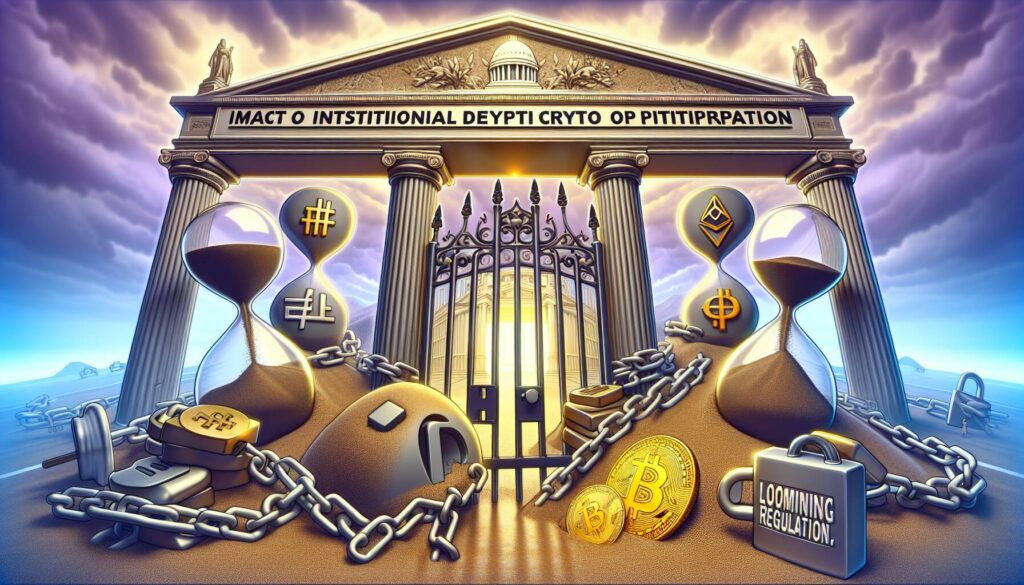
As the U.S. cryptocurrency landscape evolves, recent insights from broker Benchmark highlight a critical period of anticipation for financial institutions eyeing the market. The report suggests that delayed markups could offer Congress the necessary window to address pivotal issues influencing institutional participation in American crypto markets.
This delay may not only affect policy formation but also the broader climate of regulatory oversight surrounding digital currencies. With institutions cautiously watching, the actions taken by lawmakers could play a decisive role in shaping an environment conducive to crypto investments.
The anticipation surrounding regulatory decisions signifies the importance of clear guidelines in ensuring the confidence of institutional players in the U.S. crypto space.
The uncertain regulatory landscape has raised questions about the future of cryptocurrency institutions. Stakeholders are keenly aware that clarity from Congress could either pave the way for a robust market entry or further complicate the journey into this rapidly evolving financial frontier.
Impact of Delayed Markups on U.S. Crypto Markets
The following key points summarize the implications of delayed markups on the entry of institutions into U.S. crypto markets:
- Time for Legislative Resolution:
- Delays provide Congress with the opportunity to address regulatory uncertainties.
- Potential changes in legislation may create a clearer framework for institutions.
- Institutional Participation:
- Enhanced regulations could either encourage or dissuade institutional investment in crypto.
- A stable regulatory environment may lead to greater trust and participation from financial institutions.
- Market Stability:
- Delayed actions can prevent overly hasty decisions that may lead to market volatility.
- Time for resolution can help mitigate risks associated with abrupt policy changes.
- Impacts on Innovation:
- Clear regulations could foster innovation in blockchain and related technologies.
- Uncertainty may hinder development and delays in crypto-related projects.
- Investor Protection:
- Delays may allow for the implementation of investor protection measures in crypto markets.
- This could safeguard individual investors and enhance market confidence.
Impact of Delayed Markups on U.S. Crypto Market Entry
The recent analysis from Benchmark highlights the potential advantages and drawbacks of delayed markups in Congress for institutions eyeing entry into the U.S. cryptocurrency landscape. One of the primary competitive advantages of this delay is the breathing room it provides lawmakers to address existing regulatory uncertainties. By allowing more time to discuss critical aspects such as compliance, consumer protection, and institutional readiness, Congress can create a more favorable environment for institutional players. This could lead to clearer guidelines and foster greater confidence among potential investors.
However, these delays also present notable disadvantages. Institutions eager to enter the crypto market may find the wait frustrating, leading them to explore markets with more defined regulations, potentially stifling innovation within the U.S. sector. Moreover, prolonged indecision might allow foreign competitors to gain an advantageous foothold, further complicating the ability of domestic firms to compete.
Entities that may benefit from this scenario include compliance-focused firms looking to position themselves as experts in navigating new regulations, as well as traditional financial institutions that might capitalize on a pause to enhance their blockchain capabilities. Conversely, startups and smaller firms might face difficulties, finding that the uncertainty diminishes their chances of attracting investment and scale, forcing them to rethink their strategies or relocate to more welcoming regulatory environments.