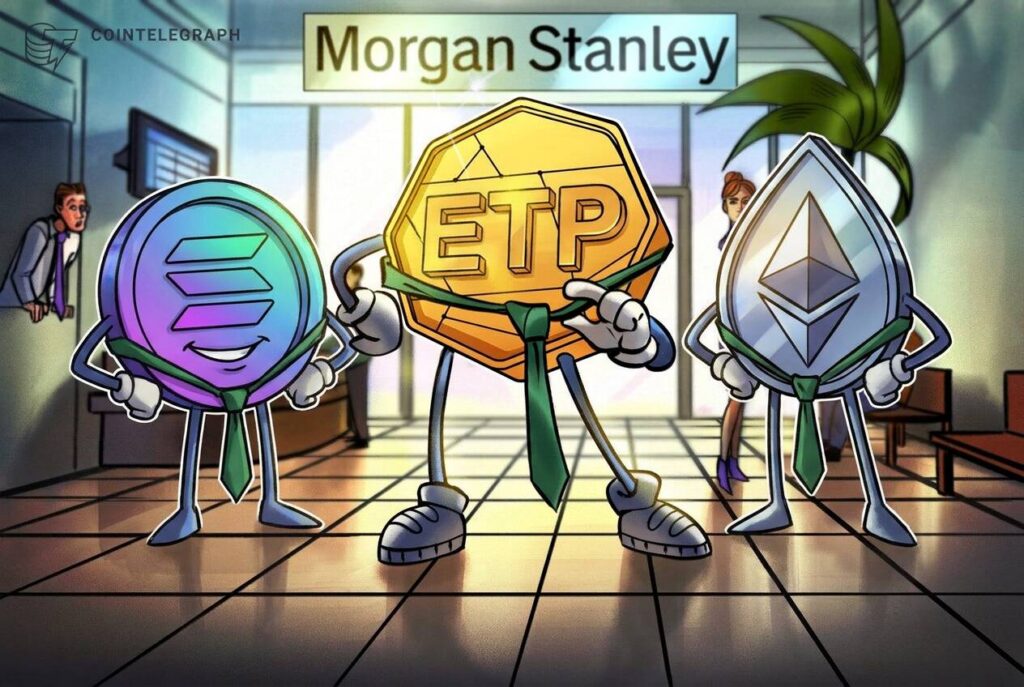
In a significant development for the cryptocurrency market, a new suite of exchange-traded products (ETPs) is making waves by directly tracking two prominent digital assets: Ether and Solana. These innovative financial instruments aim to bring a fresh wave of accessibility and investment opportunities to both seasoned traders and newcomers alike.
As the popularity of decentralized finance continues to rise, the introduction of ETPs that not only track the performance of Ether and Solana but also offer staking rewards marks a pivotal moment. This feature allows investors to earn returns on their holdings, reflecting an effort to create more engaging and financially rewarding investment vehicles. Following the early success of the firm’s Bitcoin fund launched earlier this year, these new products represent a strategic expansion into the diverse world of cryptocurrencies.
With Ether and Solana gaining traction as leading blockchain platforms, interest in these assets has surged. The capability to stake rewards sets these ETPs apart, potentially appealing to a growing demographic of investors interested in passive income streams.
The launch of these ETPs underscores a broader trend within the financial ecosystem, where traditional investment strategies increasingly intertwine with digital assets. As more institutions and individual investors explore the possibilities within the cryptocurrency landscape, these innovative products could play a crucial role in shaping the future of digital asset investing.
New Exchange-Traded Products for Ether and Solana
The recent launch of exchange-traded products (ETPs) that track Ether and Solana offers new investment opportunities with potential rewards for investors.
- Introduction of Ether and Solana ETPs:
- Allows investors to gain exposure to cryptocurrency markets without direct ownership.
- Follows the successful model of the firm’s Bitcoin fund.
- Staking Rewards:
- Offers investors the opportunity to earn passive income through staking.
- Increases the attractiveness of these ETPs compared to traditional investments.
- Diversification Benefits:
- Investors can diversify their portfolios by adding Ether and Solana to their assets.
- Helps mitigate risks associated with market volatility in cryptocurrencies.
- Impact on Investment Strategies:
- Encourages wider adoption of cryptocurrencies among traditional investors.
- May influence financial planning and retirement strategies for readers looking to invest in digital assets.
Comparative Analysis of New Ether and Solana Exchange-Traded Products
The introduction of new exchange-traded products (ETPs) that track Ether and Solana marks a significant development in the cryptocurrency investment landscape. These innovative financial instruments promise not only to provide exposure to these burgeoning cryptocurrencies but also to deliver staking rewards, enhancing their appeal to investors looking for passive income opportunities. This contrasts with previous offerings that primarily focused on Bitcoin, which may limit diversification for those seeking broader exposure.
When examining the competitive advantages of these new ETPs, it’s apparent that they capture investor interest in Ethereum and Solana, two platforms that have gained traction for their smart contract capabilities and DeFi applications. Unlike traditional investments, the staking rewards associated with these products may provide a stronger incentive, potentially attracting a demographic eager for yield in a low-interest-rate environment. Moreover, tracking two of the most popular cryptocurrencies allows for a degree of risk mitigation, positioning these ETPs favorably against other single-asset products.
However, there are inherent disadvantages to consider as well. The volatility often associated with Ether and Solana could deter conservative investors who prefer the relative stability of Bitcoin. Furthermore, market sentiment can be fickle, and negative regulatory news could adversely impact these newer products more than established Bitcoin investments. The unique characteristics of each cryptocurrency also complicate portfolio management for investors, as they may need specialized knowledge to navigate the differences effectively.
These ETPs could particularly benefit retail investors looking to enter the cryptocurrency market without the complexities of direct ownership. They present a user-friendly way to accrue returns while minimizing the hassles of managing digital wallets and exchanges. Conversely, professional investors or those already well-versed in digital assets might find these new products too simplistic, favoring more nuanced investment strategies that involve direct trades or other derivatives.
With the surge in interest in decentralized finance (DeFi), these new ETPs could play a role in educating and guiding new investors, providing them with a foundation to understand broader market trends. However, the potential for confusion about staking mechanics and product structures might create challenges for investors who run the risk of misinterpreting their investment risks and rewards.