








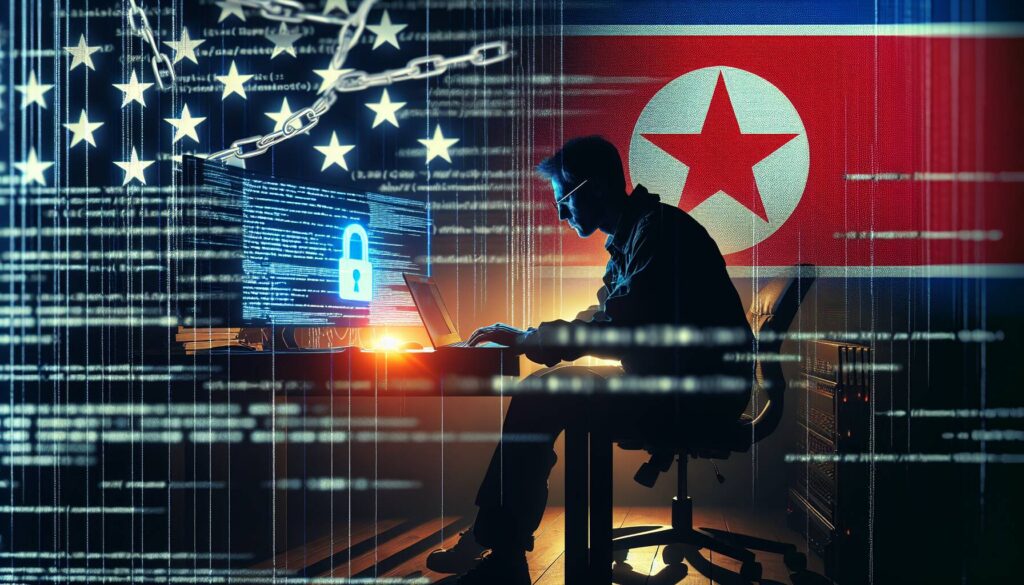
In a startling update on the intersection of cybersecurity and international relations, the U.S. Treasury Department has unveiled a compelling report detailing North Korea’s tactics in exploiting American businesses. According to the findings, the rogue nation has allegedly infiltrated IT workers into various sectors across the United States. These workers are not just contributing to the economy; they are purportedly funneling their wages back to North Korea, where the funds are utilized to support the country’s controversial weapons of mass destruction programs.
This revelation sheds light on the increasingly sophisticated methods employed by North Korea to circumvent international sanctions and finance its military ambitions. By embedding skilled IT professionals within U.S. companies, North Korea not only gains access to technological resources but also secures a steady stream of income vital for its agenda. The implications of these activities could resonate throughout the cybersecurity landscape and the broader financial system, raising alarms about the need for enhanced vigilance and security measures within American firms.
“This situation underscores the importance of recognizing and mitigating hidden risks posed by geopolitical adversaries within the workforce,” said an unnamed cybersecurity expert.
As awareness of these infiltration strategies grows, stakeholders across the cryptocurrency and tech sectors are urged to remain alert to the potential implications of such infiltrations, reflecting the wider challenges posed by state-sponsored hacking and economic espionage in today’s interconnected world.
North Korea’s Infiltration of U.S. Businesses
The following key points outline the implications of North Korea’s infiltration of IT workers into U.S. businesses:
- Unauthorized Employment: North Korean IT workers are covertly employed in U.S. businesses.
- Fund Allocation: Wages earned by these workers are redirected back to North Korea.
- Funding for Weapons: The channeled funds are reportedly used to finance weapons of mass destruction programs.
- National Security Threat: This infiltration presents a significant threat to U.S. national security and economic integrity.
- Impact on Businesses: U.S. companies may unknowingly become complicit in funding hostile activities.
- Regulatory Scrutiny: Increased scrutiny on hiring practices in the tech industry may arise to prevent such infiltrations.
These points illustrate the potential risks and ramifications for individuals and organizations, emphasizing the importance of vigilance and compliance in the hiring process.
North Korea’s Covert Operations: A Threat to U.S. Business Security
The recent revelation from the Treasury Department regarding North Korea’s infiltration of IT workers into American businesses highlights significant security risks not only for corporations but for national safety as well. This strategy of channeling wages back to support weapons programs underscores a cunning method employed by North Korea to bolster its military initiatives while leveraging the international labor market.
Comparatively, similar cases have emerged concerning espionage tactics used by other nations, such as China and Russia, where professionals are often recruited not just for their expertise but also to serve as conduits for intelligence or economic gain. However, the unique aspect of North Korea’s approach lies in its direct linkage to funding military programs, creating a more immediate and hazardous level of threat for businesses that might unknowingly become part of this cycle.
Competitive Advantages: North Korea’s ability to integrate skilled workers into the U.S. landscape presents them with an advantage in acquiring technical know-how and resources that are otherwise restricted due to international sanctions. For businesses, a skilled workforce can enhance productivity and innovation, but the looming shadow of espionage can tarnish these benefits. Companies driven by profitability might overlook ethical implications, making them easy targets for such infiltration.
Disadvantages: The biggest downside for U.S. businesses lies in the potential for devastating reputational damage should associations with North Korean operatives come to light. Moreover, financial losses incurred through cyber-attacks or data breaches linked to these infiltrators could be severe, leading to significant regulatory scrutiny and potential legal consequences. The broader implications include the erosion of trust in the tech industry, a vital sector for the U.S. economy.
This situation could particularly benefit cybersecurity firms and intelligence agencies as they ramp up efforts to detect and thwart such infiltrations. On the flip side, corporations that find themselves entangled in these schemes could face devastating operational disruptions and loss of client trust, ultimately hindering their ability to compete effectively in the global market.