










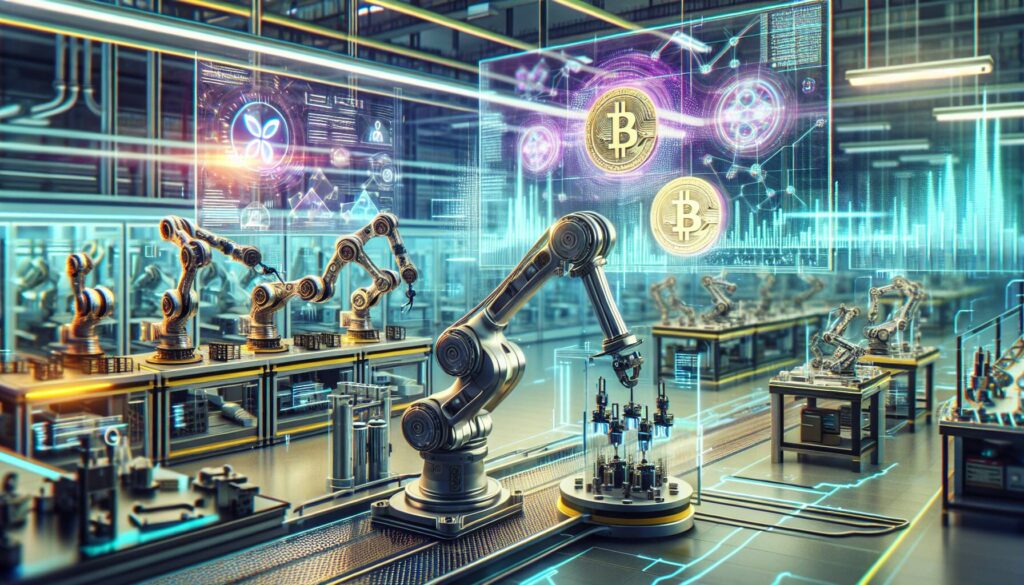
The landscape of cryptocurrency is witnessing an intriguing evolution as Tether, the company behind the world’s largest stablecoin, USDT, valued at an impressive $186 billion, expands its horizons. Traditionally associated with the digital currency sector, Tether is now setting its sights on promising areas such as artificial intelligence and robotics, signaling a strategic diversification in response to the rapidly changing technological landscape.
“This move underscores the confidence Tether has in the technological advancements across various sectors and highlights a trend where cryptocurrency firms are increasingly engaging with broader tech industries.”
As stablecoins continue to play a vital role in providing stability in the volatile crypto market, Tether’s ambition to branch into AI and robotics hints at a future where cryptocurrencies could integrate more seamlessly with cutting-edge technologies. This shift not only reinforces Tether’s position as a market leader but also positions the company as a key player in steering innovation across different sectors.
“By venturing beyond its core offerings, Tether illustrates the potential for synergy between cryptocurrency and emerging technologies, paving the way for novel applications and solutions.”
With Tether’s significant market presence, its entry into these forward-looking fields will be closely watched by investors and industry experts alike, marking a significant chapter in the interplay between digital currencies and technological advancements.
The Expansion of the USDT Company into AI and Robotics
The company that manages the $186 billion USDT stablecoin is diversifying its interests into emerging technologies, which could have significant implications for various sectors and the daily lives of individuals.
- USDT’s Market Influence:
- Largest stablecoin in the market with a valuation of $186 billion.
- Stablecoins play a critical role in the cryptocurrency ecosystem, impacting liquidity and market dynamics.
- Diversification Efforts:
- Expansion into artificial intelligence (AI) could lead to enhanced services and products.
- Investments in robotics may drive automation across industries, affecting job markets and productivity.
- Technological Integration:
- AI and robotics can enhance the operational efficiency of financial services, potentially lowering costs for consumers.
- Increased use of AI in financial decisions may change how individuals manage investments.
- Impact on Everyday Life:
- Advancements in these sectors could lead to innovative solutions in healthcare, transport, and personal finance.
- Automation from robotics may change daily job functions and create a demand for new skills.
- Potential Risks:
- Increased reliance on AI and robotics raises concerns over data privacy and security.
- Job displacement due to automation could impact employment rates, necessitating workforce transitions.
USDT’s Expansion: Navigating New Frontiers Beyond Crypto
The company responsible for the market-leading stablecoin, USDT, is making headlines by broadening its horizons beyond the digital currency realm. This strategic shift toward sectors like artificial intelligence and robotics presents both competitive advantages and challenges, especially when compared to other players in the cryptocurrency and tech industries.
Competitive Advantages: The move into AI and robotics positions USDT’s parent company as a frontrunner in sectors that are growing rapidly and are pivotal for future technological advancements. By leveraging its robust financial backing, the company potentially opens new revenue streams and partnerships that could enhance its market share. This diversification could bolster investor confidence, especially in volatile markets, as it demonstrates a commitment to innovation and adaptability. Furthermore, capitalizing on AI and robotics could help integrate blockchain technology into these emerging fields, creating synergies that might optimize operational efficiencies and attract a tech-savvy clientele.
Potential Disadvantages: However, venturing into these competitive sectors also brings inherent risks. The landscape of AI and robotics is crowded with established tech giants and startups alike, making it challenging to gain traction without a clear differentiation strategy. Additionally, as the company expands beyond its core competencies in fintech, there may be a dilution of brand identity that could alienate loyal cryptocurrency supporters. Challenges such as regulatory scrutiny in emerging tech applications could also pose hurdles, potentially sidelining initiatives or stalling growth.
This transition could particularly benefit tech enthusiasts and investors looking for a stable foundation in the fluctuating world of cryptocurrencies while exploring advancements in AI and robotics. Conversely, it might create concerns for traditional cryptocurrency investors who prefer a focused commitment to digital assets, fearing that this diversification may lead the company away from its foundational strengths in the crypto market.